OUR WORK

Wombat Rehabilitation & Care

The care of wombats requires a dedicated team and a large range of facilities, equipment, and training. Hunter Wildlife Rescue is experienced in treating mange in the paddock, raising a wombat from a tiny orphan in an incubator to soft release, managing injuries from predator attacks, motor vehicle accidents and other mishaps whether the injuries a minor or severe.

Our care begins with the rescue and transport of the wombat to our facilities across the hunter region. We treat wombats in care and in the field (mange), always the preferred option for adult wombats. We can care for an 80g pinkie in a humidicrib through to a large wombat in a release pen.

Good care comes from knowledge and knowledge comes from training, mentoring from experts and hands-on training by assisting at various wombat facilities throughout our area. We are supported with consultation and specialised treatment from our wonderful vets at Somersby Animal Hospital and dedicated physiotherapy at Whole Family Health.
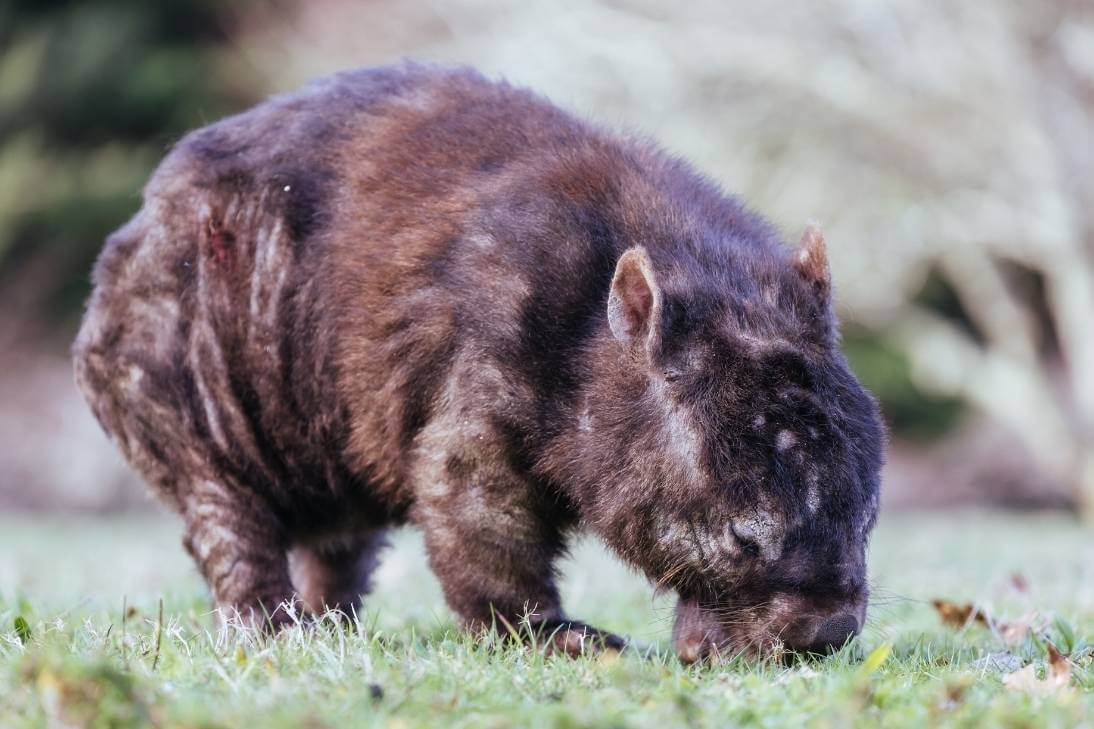
Wombat Mange Rescue Grant FNPW

Facilities & Equipment

In our range of facilities we deal with infections, broken bones, wounds, concussion, exposure, pneumonia and a variety of other conditions. Across the area we have multiple facilities to suit the different ages and types of injuries of wombats coming into care.
Intensive Care Unit

Our newly-built intensive care hospital pen is designed to be warmed with in-floor heating and cooled with a portable air conditioner. One side is partially open to allow for natural airflow and daily light rhythms. This can also be covered with a clear, solid “curtain” to manage extremes of heat or cold. A special floor drainage system assists with cleaning and infection control.

Hospital Ward Pen

When controlled care is required, but not intensive care, we have a “hospital ward” pen. More open to the natural light and air flow but with a sleeping area able to be heated or cooled, as required, this provides a facility for wombats requiring longer term hospital level care. Many wombats have been through this facility as a result of car accidents and dog attacks.

Demountable Pens

Strategically placed throughout the our region we have purpose built portable holding pens. These were designed by WACS (Wildlife & Carer Support) to come apart for storage but be sturdy enough to provide overnight accommodation for a large wombat or ample room for orphans when they are starting to become active and require play space. Here food can be carefully monitored, warmth controlled and treatments easily given.

Open Air Pens

Growing wombats require increasing levels of space and we have several kindy pens of different sizes, bigger pens where orphans can learn to dig and build burrows, through to our large soft release pens. Spread across the area there are four release sites currently active with one being built and another one in the planning stages. We often have working bees to build pens or carry out maintenance.

Frequently Asked Questions

Have questions about helping wombats? Learn what to do, how to help, and where to get support here.e
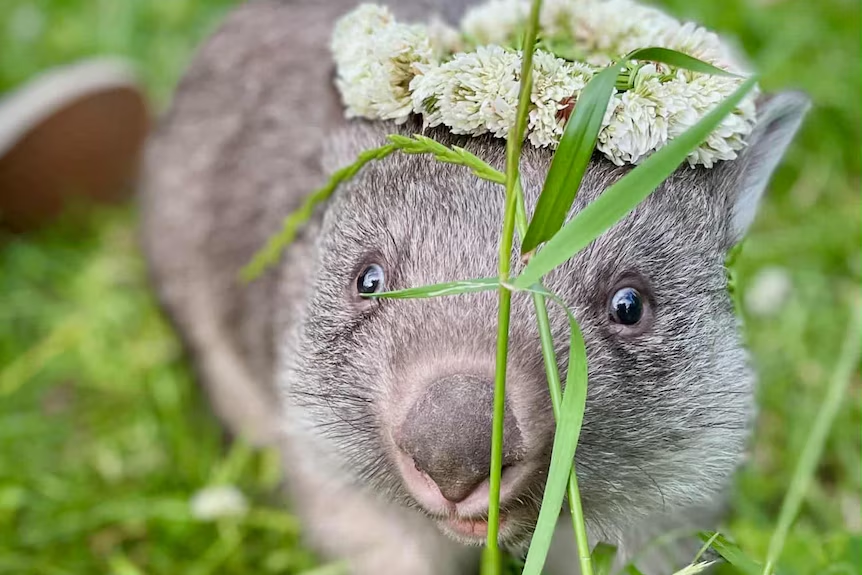
Wombats are a protected species. Harming a wombat or its home is cruel and illegal, with penalties of up to $12,000 in fines and/or six months in jail.

Call Hunter Wildlife Rescue on 0418 628 483 immediately. Do not try to move the wombat yourself.

No. Adult wombats are strong and can injure you. Always wait for a trained rescuer.

If safe, check the pouch for a joey. If none, move the body off the road to prevent further accidents, or call us for help.

If safe to do so, gently check the pouch with gloves or a cloth. If you find a joey, keep it warm in a wrap and call us straight away.

About 80% of our work with wombats is in the Cessnock LGA around Wollombi, Laguna, Quorrobolong, Mount View and we also do a lot of work in the Singleton LGA.