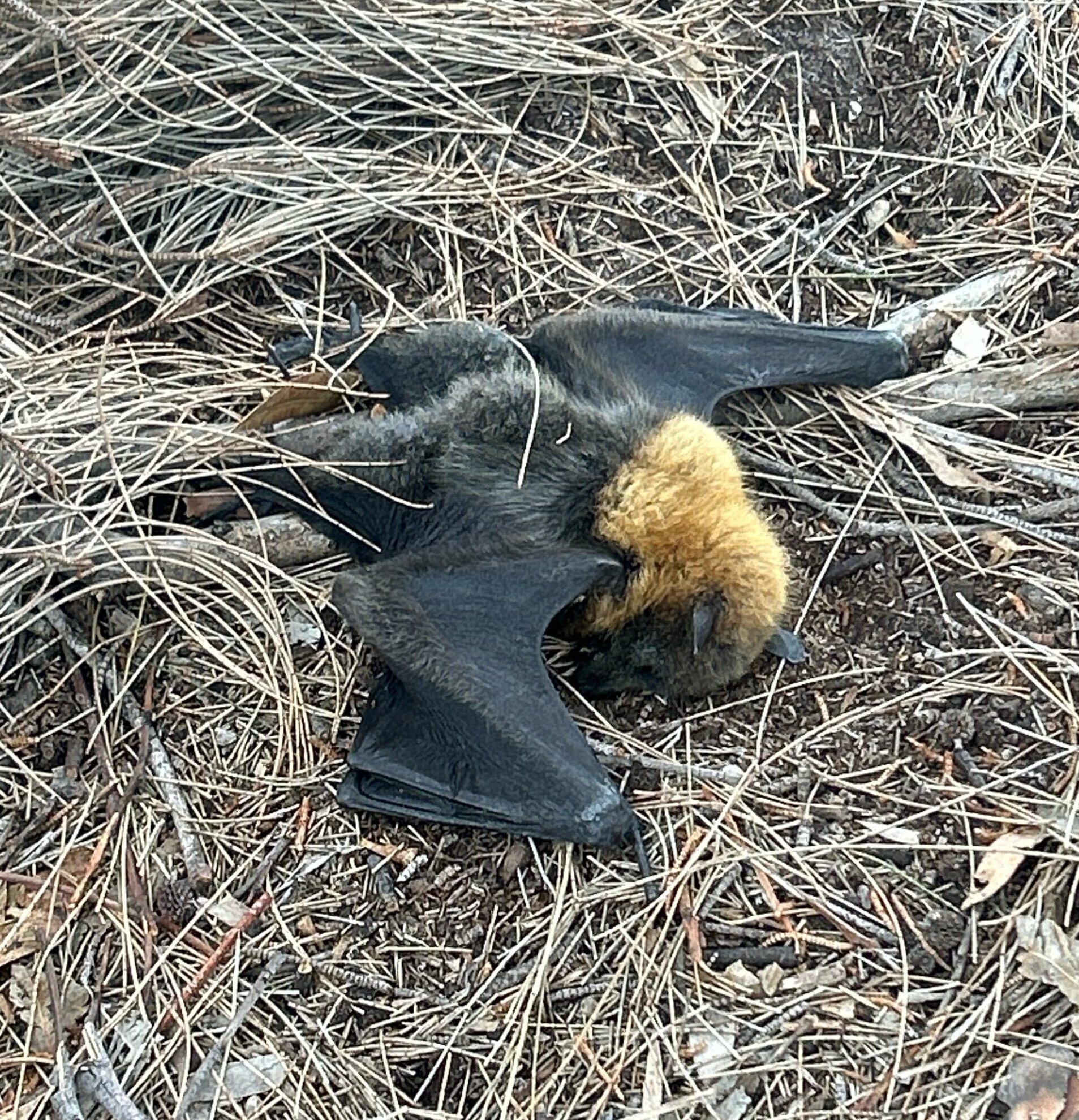
Flying-foxes across the east coast of Australia are suffering from a mass-starvation event. The flowering native trees they rely on simply aren’t producing nectar, and flying-foxes, along with many other nectar-feeding animals, are now in starvation mode.
The timing couldn’t be worse. Many mothers are heavily pregnant or have just given birth, so they need more energy than ever. Our rescuers are seeing more weak, sick and grounded flying-foxes, and we need the community’s help to get them through.
Why are flying-foxes in my backyard?
With little food in the bush, hungry flying-foxes are turning to backyard fruit trees. Some of that fruit is doing them harm. Unripe green mulberries in particular are making flying-foxes sick.
You may also notice them staying in your tree during the day instead of heading home. This is called “resource guarding”. When a starving flying-fox finds something edible, it stays with the food rather than spending precious energy flying back to its camp.
It can look unusual, but it’s a survival strategy. The kindest thing you can do is leave them in peace.
Which fruits are making them sick?
Flying-foxes normally live on nectar, pollen and ripe native fruits. When those run out, they eat whatever they can find, and not all of it agrees with them.
Green (unripe) mulberries are the biggest problem our rescuers are seeing right now. Hungry flying-foxes are eating mulberries before they ripen. This is making some of them sick.
If you have a mulberry or other fruit tree, you can help by picking up fallen and unripe fruit so it doesn’t add to the problem.
People can also help by creating wreaths out of wire coathangers with soft ripe fruits like pear, apple, watermelon and rockmelon.
Bread, meat, citrus, vegetables, sugary foods and rotten fruit can all harm them, and putting food out in the wrong place can draw them into danger. If supplementary feeding is needed in your area, our team can advise you on what to offer and how.
Found a flying-fox on the ground?
If it’s alive: please don’t touch it. Flying-foxes transmit Australian bat lyssavirus, so only vaccinated, trained rescuers should handle them.
- Gently place a box or laundry basket over the flying-fox to keep it safe.
- Keep pets and children well away.
- Call our 24/7 Rescue Line on 0418 628 483.
If you are bitten or scratched, wash the wound well with soap and water for at least 15 minutes and see a doctor straight away.
If it has died: first check, without touching, whether a baby is still clinging to its mother. Pups can survive for some time after their mum has died. If you see one, call us immediately.
If there is no baby, use a shovel or thick gloves to place the flying-fox in a plastic bag, put that bag inside a second bag, and dispose of it in your rubbish bin.
What if my dog or cat finds a flying-fox?
Weak and grounded flying-foxes are easy targets for pets, so it’s worth being prepared.
- Keep pets inside at night, especially while flying-foxes are feeding in your trees.
- Don’t pull a bat out of your pet’s mouth with bare hands. Call your pet away, or use thick gloves or a towel if you must separate them.
- If the flying-fox is alive, cover it with a box or laundry basket and call our Rescue Line on 0418 628 483. Even if it looks unhurt, pet bites and scratches can become badly infected, so it will need a vet check.
- If the flying-fox is dead, don’t throw it out straight away. Call us first, as it may need to be tested.
- Call your vet if your pet may have been bitten or scratched, or has had a bat in its mouth. They can talk you through any risk and what to do next. Australian bat lyssavirus has never been recorded in a dog or cat in Australia, but your vet is the right person to assess your pet.
Do flying-foxes spread disease?
The short answer: the risk is extremely low, as long as you don’t handle them.
Australian bat lyssavirus (ABLV) is related to rabies. Australia is free of rabies itself, and only a very small number of bats carry ABLV. It spreads only through a bite or scratch from an infected bat, not through urine, droppings or a bat flying overhead. There have been just four confirmed human cases in Australia. This is exactly why we ask you never to touch a flying-fox and to call trained, vaccinated rescuers instead.
Hendra virus can pass from flying-foxes to horses, usually through food contaminated with flying-fox urine or saliva. People do not catch Hendra directly from flying-foxes. Horse owners can protect their horses with the Hendra vaccine and by keeping feed and water troughs out from under trees where flying-foxes feed.
Droppings carry only a small risk of stomach bugs. Avoid handling them, and don’t drink from your rainwater tank if droppings may have washed into it.
If you are bitten or scratched, wash the wound with soap and water for at least 15 minutes, apply an antiseptic such as povidone-iodine, and see a doctor straight away. More from NSW Environment and Heritage
How you can help from your backyard
- Leave them in peace. Flying-foxes feeding in your trees need every bit of energy they can save.
- Check your netting. Remove netting from fruit and flowering native trees where you can. If you must net, use only wildlife-safe netting you can’t poke your finger through, or cover single branches with fine mesh bags.
- Clean up fallen fruit, especially green mulberries.
- Keep pets inside at night while flying-foxes are visiting.
- Call before you feed. If you’d like to put out fruit or water, call us first so we can advise what’s safe and where to place it.
- Plant for the future. Native flowering trees such as eucalypts, banksias, grevilleas and melaleucas feed flying-foxes in good seasons.
- Save our Rescue Line in your phone: 0418 628 483. Call if you see a flying-fox on the ground, low in a tree during the day, caught in netting or wire, or a baby on its own.
- Support our rescuers. Every rescue relies on volunteers, and donations pay for food, vet care and equipment.
Why flying-foxes matter
Flying-foxes are among our most important pollinators and seed dispersers, travelling long distances each night to keep native forests healthy. The grey-headed flying-fox is listed as a vulnerable species, so every flying-fox saved helps our forests survive.
Thank you for looking out for them during this difficult season.
Want to help?
- Share our posts so more people know what to do
- Report injured native animals to our 24/7 Rescue Line: 0418 628 483
- Volunteer with us: hunterwildlife.org.au/volunteers
- Donate to support our work: hunterwildlife.org.au/donate